





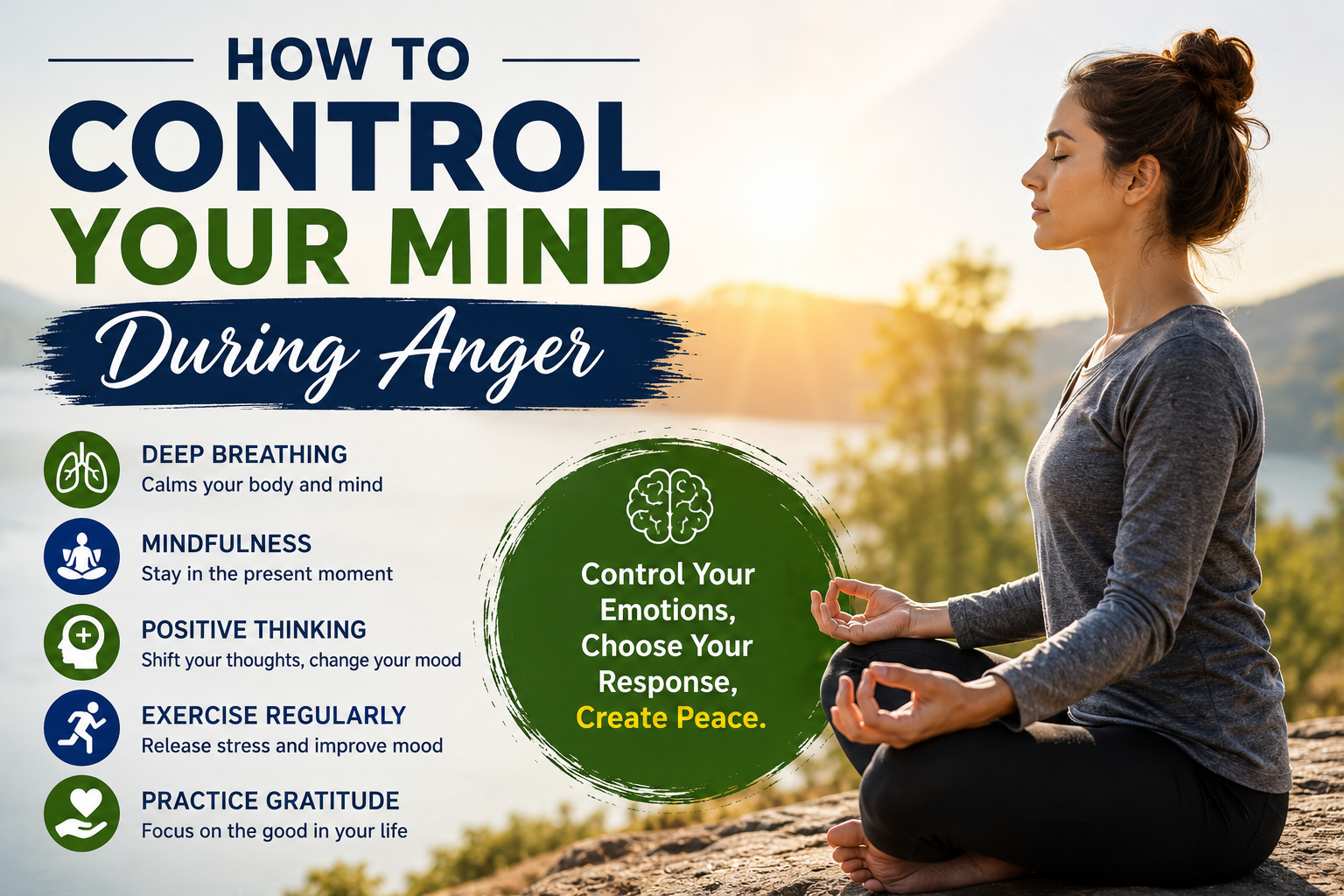
Anger is a natural human emotion. Everyone experiences it at some point in life. Whether it is caused by stress, misunderstandings, disappointment, or frustration, anger can quickly take control of our thoughts and actions if not managed properly. While feeling angry is normal, allowing anger to control your behavior can lead to damaged relationships, poor decision-making, and negative effects on your mental and physical health.
The good news is that anger can be managed effectively. Learning how to control your mind during moments of anger helps you stay calm, think clearly, and respond wisely rather than react impulsively. In this article, we will explore practical techniques and habits that can help you control your mind when anger arises.
Understanding Anger
Before learning how to control anger, it is important to understand what anger is. Anger is an emotional response to situations that make us feel threatened, treated unfairly, hurt, or frustrated. When anger appears, the body releases stress hormones such as adrenaline and cortisol. These chemicals increase heart rate, blood pressure, and muscle tension, preparing the body for a “fight or flight” response.
This biological reaction can make it difficult to think rationally. That is why controlling the mind during anger requires conscious effort and practice.
1. Take Deep Breaths
One of the simplest and most effective ways to calm your mind during anger is deep breathing.
When you are angry, your breathing becomes fast and shallow. Deep breathing sends signals to your brain that the situation is not life-threatening and helps activate the body’s relaxation response.
How to Practice Deep Breathing:
- Inhale slowly through your nose for four seconds.
- Hold your breath for four seconds.
- Exhale slowly through your mouth for six seconds.
- Repeat this process five to ten times.
Deep breathing reduces tension, lowers stress hormones, and helps you regain mental clarity.
2. Count Before Reacting
Many people regret the words they say in moments of anger. Taking a few seconds before responding can prevent emotional reactions.
When anger starts rising:
- Count slowly from 1 to 10.
- If needed, count to 20 or even 50.
- Focus only on the numbers.
This short pause allows your rational brain to regain control and prevents impulsive decisions.
3. Walk Away Temporarily
Sometimes the best response to anger is creating distance from the situation.
If a conversation is becoming heated:
- Excuse yourself politely.
- Take a short walk.
- Spend a few minutes alone.
Walking away does not mean avoiding the problem. It simply gives your mind time to calm down so you can return with a clearer perspective.
4. Practice Mindfulness
Mindfulness is the practice of focusing on the present moment without judgment.
When angry thoughts begin to race, mindfulness helps you observe your emotions instead of becoming controlled by them.
Simple Mindfulness Exercise:
- Notice what you are feeling.
- Identify the emotion by saying, “I am feeling angry.”
- Observe your thoughts without reacting to them.
- Focus on your breathing or surroundings.
Mindfulness creates a gap between emotion and action, allowing you to choose your response wisely.
5. Change Your Perspective
Often, anger becomes stronger because of the way we interpret situations.
Ask yourself:
- Is this situation really as bad as it seems?
- Will this matter a week from now?
- Could there be another explanation?
Looking at the situation from a different angle can reduce emotional intensity and help you think more objectively.
6. Use Positive Self-Talk
The words you tell yourself have a powerful effect on your emotions.
Instead of saying:
- “This is terrible.”
- “I can’t stand this.”
- “Everything is ruined.”
Try saying:
- “I can handle this calmly.”
- “This situation will pass.”
- “I choose peace over anger.”
Positive self-talk helps calm the mind and prevents negative thoughts from fueling anger.
7. Exercise Regularly
Physical activity is one of the most effective long-term solutions for anger management.
Exercise helps:
- Reduce stress hormones.
- Release endorphins.
- Improve mood.
- Increase emotional resilience.
Activities such as walking, running, cycling, swimming, yoga, or strength training can significantly improve your ability to stay calm during stressful situations.
8. Listen to Calming Music
Music has a direct impact on emotions and mental state.
When feeling angry:
- Listen to soft instrumental music.
- Try nature sounds.
- Play calming meditation tracks.
Gentle music slows the heart rate and helps redirect your attention away from anger-triggering thoughts.
9. Practice Gratitude
Anger often causes us to focus only on what is wrong. Gratitude shifts attention toward what is positive.
Take a moment to think about:
- Three things you are grateful for.
- People who support you.
- Positive experiences in your life.
Gratitude changes your mental focus and reduces emotional negativity.
10. Avoid Immediate Decisions
Strong emotions can cloud judgment.
When angry, avoid making major decisions such as:
- Ending relationships.
- Quitting jobs.
- Sending emotional messages.
- Making financial choices.
Wait until you are calm before making important decisions. Clear thinking leads to better outcomes.
11. Learn Forgiveness
Holding onto resentment can keep anger alive for months or even years.
Forgiveness does not mean approving someone’s behavior. It means choosing not to carry the emotional burden.
Benefits of forgiveness include:
- Reduced stress.
- Better mental health.
- Improved relationships.
- Greater inner peace.
Learning to forgive can significantly improve emotional control.
12. Develop Healthy Communication Skills
Many conflicts arise because emotions are expressed aggressively rather than constructively.
Instead of saying:
“You always make me angry.”
Try saying:
“I feel upset when this happens.”
Using “I” statements reduces defensiveness and promotes productive conversations.
Healthy communication helps solve problems without escalating anger.
13. Get Enough Sleep
Lack of sleep makes emotional regulation more difficult.
Studies show that sleep deprivation can:
- Increase irritability.
- Reduce patience.
- Intensify emotional reactions.
Aim for seven to nine hours of quality sleep each night to improve your ability to manage anger effectively.
14. Practice Meditation
Meditation trains the mind to remain calm under pressure.
Even ten minutes of daily meditation can:
- Reduce stress.
- Improve focus.
- Increase emotional awareness.
- Strengthen self-control.
Regular meditation helps build long-term resilience against anger and emotional triggers.
15. Seek Support When Needed
Sometimes anger may be linked to deeper issues such as chronic stress, trauma, anxiety, or unresolved emotional pain.
Talking with:
- Trusted friends
- Family members
- Counselors
- Therapists
can provide valuable support and guidance.
Seeking help is a sign of strength, not weakness.
Common Mistakes to Avoid
When trying to control anger, avoid these common mistakes:
Suppressing Anger
Ignoring emotions completely can cause them to build up over time.
Exploding Emotionally
Yelling, insulting others, or acting aggressively often worsens situations.
Seeking Revenge
Revenge rarely solves problems and usually creates more conflict.
Blaming Others
Taking responsibility for your reactions is an important step toward emotional control.
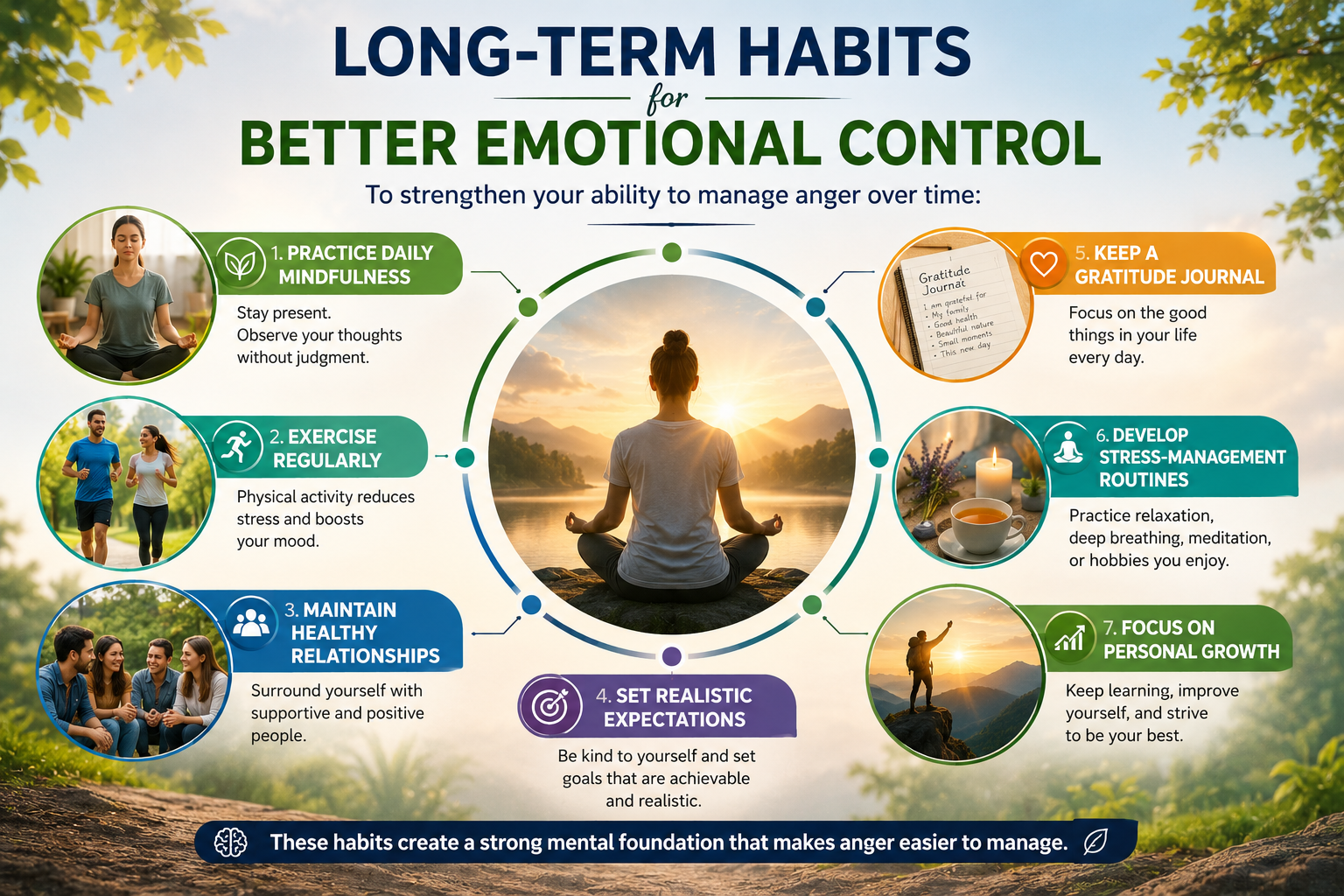
Long-Term Habits for Better Emotional Control
To strengthen your ability to manage anger over time:
- Practice daily mindfulness.
- Exercise regularly.
- Maintain healthy relationships.
- Set realistic expectations.
- Keep a gratitude journal.
- Develop stress-management routines.
- Focus on personal growth.
These habits create a strong mental foundation that makes anger easier to manage.
Conclusion
Anger is a natural emotion, but it does not have to control your life. By practicing deep breathing, mindfulness, positive thinking, exercise, gratitude, and healthy communication, you can train your mind to stay calm even during difficult situations. The goal is not to eliminate anger completely but to respond to it in a healthy and constructive way.
Controlling anger is a skill that improves with practice. Every time you choose patience over reaction, understanding over frustration, and calmness over conflict, you strengthen your emotional intelligence and create a more peaceful, balanced life. Remember, true strength is not found in losing control—it is found in mastering your emotions.