





Introduction
Global warming is one of the greatest challenges facing humanity in the 21st century. It refers to the long-term increase in Earth’s average surface temperature caused primarily by human activities such as burning fossil fuels, deforestation, industrialization, and excessive greenhouse gas emissions. As the planet warms, weather patterns become more unpredictable, sea levels rise, and extreme climate events occur more frequently.
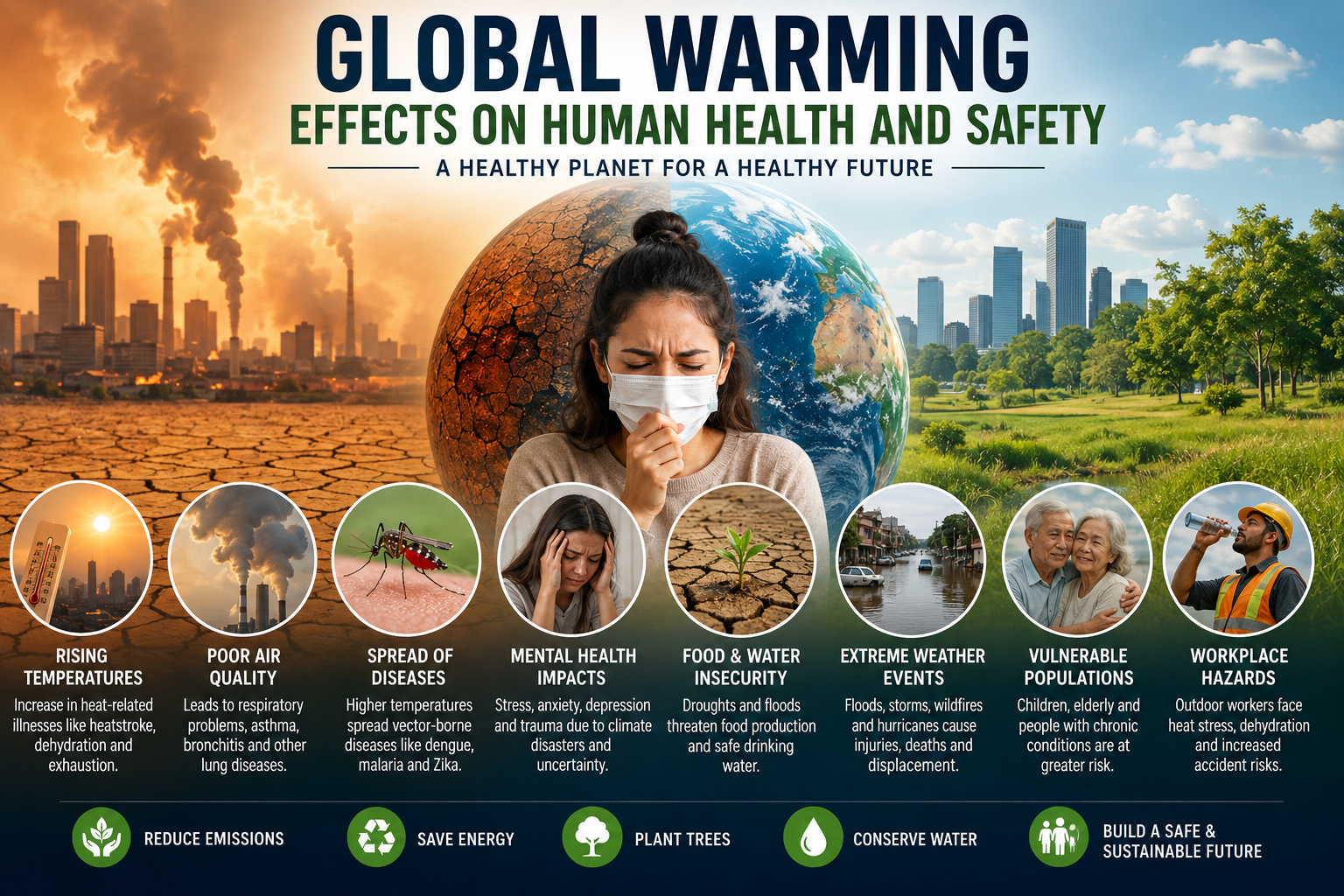
While global warming affects ecosystems, wildlife, and economies, its impact on human health and safety is becoming increasingly severe. Rising temperatures, poor air quality, extreme weather events, food insecurity, and the spread of infectious diseases threaten millions of lives worldwide. Vulnerable populations—including children, older adults, pregnant women, outdoor workers, and individuals with chronic illnesses—face the greatest risks.
This article explores the major effects of global warming on human health and safety, explains why these challenges are increasing, and highlights practical measures individuals, communities, and governments can take to reduce risks and build a healthier future.
1. Heat-Related Illnesses and Rising Temperatures
One of the most visible consequences of global warming is the increase in average temperatures and more frequent heatwaves. Heatwaves are lasting longer, occurring more often, and reaching higher temperatures than ever before.
Prolonged exposure to extreme heat can lead to serious health conditions, including:
- Heat exhaustion
- Heat cramps
- Heatstroke
- Severe dehydration
- Kidney damage
- Cardiovascular complications
Heatstroke is particularly dangerous because it can cause organ failure and even death if immediate medical attention is not provided.
People most at risk include:
- Elderly individuals
- Young children
- Construction workers
- Farmers
- Athletes
- People with heart disease
- Individuals without access to air conditioning
Cities experience an additional problem known as the urban heat island effect, where concrete buildings and roads absorb and retain heat, making urban areas significantly warmer than surrounding regions.
Safety Tips
- Drink plenty of water.
- Avoid outdoor activities during peak afternoon hours.
- Wear lightweight clothing.
- Stay in shaded or air-conditioned areas.
- Check regularly on elderly family members and neighbors.
2. Poor Air Quality and Respiratory Diseases
Global warming significantly affects air quality. Higher temperatures increase the formation of ground-level ozone, a harmful pollutant that damages the lungs.
Wildfires—made more frequent by hotter and drier conditions—release enormous amounts of smoke, fine particles, and toxic gases into the atmosphere.
Poor air quality contributes to:
- Asthma attacks
- Chronic obstructive pulmonary disease (COPD)
- Bronchitis
- Lung infections
- Reduced lung function
- Increased hospital admissions
Long-term exposure to polluted air also raises the risk of:
- Heart attacks
- Stroke
- Lung cancer
- Premature death
Children are especially vulnerable because their lungs are still developing.
Protective Measures
- Monitor local air quality reports.
- Wear protective masks during wildfire smoke events.
- Use indoor air purifiers.
- Reduce exposure to heavy traffic pollution.
- Plant more trees in urban neighborhoods.
3. Spread of Infectious Diseases
Warmer temperatures allow disease-carrying insects to survive in areas that were previously too cold.
Mosquitoes, ticks, and other disease vectors are expanding into new regions, increasing the spread of illnesses such as:
- Malaria
- Dengue fever
- Chikungunya
- Zika virus
- Lyme disease
- West Nile virus
Flooding caused by extreme rainfall also contaminates drinking water and promotes outbreaks of:
- Cholera
- Typhoid
- Diarrheal diseases
- Hepatitis A
Climate change can also alter wildlife habitats, increasing contact between humans and animals that carry infectious diseases.
Prevention
- Eliminate standing water around homes.
- Use insect repellents.
- Install mosquito screens.
- Maintain proper sanitation.
- Improve access to clean drinking water.
4. Mental Health and Emotional Well-Being
Global warming affects mental health in ways that are often overlooked.
Natural disasters, displacement, crop failures, and financial losses create enormous emotional stress.
People affected by climate-related disasters may experience:
- Anxiety
- Depression
- Post-traumatic stress disorder (PTSD)
- Grief
- Sleep disorders
- Chronic stress
Many young people also experience climate anxiety, a growing fear about the future of the planet.
Communities repeatedly affected by floods, wildfires, hurricanes, or drought often suffer long-term psychological impacts.
Supporting Mental Health
- Seek professional counseling after disasters.
- Strengthen community support systems.
- Encourage open conversations about mental health.
- Develop emergency preparedness plans to reduce uncertainty.
5. Food Security, Nutrition, and Water Safety
Climate change disrupts agriculture by altering rainfall patterns, increasing droughts, and reducing crop productivity.
Major food crops such as:
- Wheat
- Rice
- Corn
- Soybeans
are increasingly affected by heat stress and changing weather conditions.
As food production declines:
- Food prices increase.
- Malnutrition becomes more common.
- Access to nutritious foods decreases.
Water resources are also threatened.
Higher temperatures increase evaporation, while floods contaminate freshwater supplies.
Unsafe drinking water increases the risk of:
- Gastrointestinal illnesses
- Dehydration
- Waterborne infections
Solutions
- Improve sustainable farming.
- Conserve water.
- Invest in climate-resilient crops.
- Protect rivers and groundwater.
- Reduce food waste.
6. Extreme Weather Events and Physical Safety
Global warming intensifies many natural disasters.
These include:
- Hurricanes
- Cyclones
- Floods
- Wildfires
- Tornadoes
- Landslides
- Droughts
Extreme weather events cause:
- Injuries
- Deaths
- Property destruction
- Infrastructure damage
- Power outages
- Transportation disruptions
Floodwaters often carry dangerous bacteria, chemicals, and debris.
Wildfires produce toxic smoke that can spread hundreds of miles beyond the fire itself.
Staying Safe
- Follow weather warnings.
- Prepare emergency supply kits.
- Know evacuation routes.
- Strengthen homes against storms.
- Purchase emergency insurance where available.
7. Vulnerable Populations Face Greater Risks
Although climate change affects everyone, some groups are more vulnerable than others.
These include:
- Infants
- Children
- Older adults
- Pregnant women
- Low-income families
- People with disabilities
- Outdoor workers
- Individuals with chronic diseases
Many vulnerable communities have limited access to healthcare, cooling systems, safe housing, and emergency services.
Climate change also increases health inequalities between wealthy and developing nations.
Governments must prioritize these populations through:
- Better healthcare access
- Early warning systems
- Affordable housing improvements
- Public cooling centers
- Disaster preparedness programs
Protecting vulnerable populations is essential for building climate resilience.
8. Workplace Safety and Occupational Hazards
Millions of workers spend long hours outdoors in agriculture, construction, transportation, mining, and emergency services.
As temperatures rise, workers face increasing risks of:
- Heat stress
- Dehydration
- Fatigue
- Reduced concentration
- Workplace accidents
- Kidney disease
Higher temperatures reduce physical performance and productivity while increasing the likelihood of injuries.
Employers should adopt climate-safe workplace policies by:
- Providing shaded rest areas
- Adjusting work schedules
- Ensuring frequent hydration breaks
- Offering heat safety training
- Monitoring employees for signs of heat illness
Protecting workers benefits both health and economic productivity.
9. Climate Change, Public Health Systems, and Community Safety
Healthcare systems are under increasing pressure as climate-related illnesses become more common.
Hospitals must respond to:
- Heat emergencies
- Disaster injuries
- Infectious disease outbreaks
- Respiratory illnesses
- Mental health crises
Emergency medical services also face challenges during floods, storms, and wildfires when transportation routes become inaccessible.
Communities can improve resilience by investing in:
- Modern hospitals
- Emergency response systems
- Climate monitoring
- Public awareness campaigns
- Green infrastructure
- Disaster preparedness training
Collaboration among governments, healthcare providers, scientists, and local communities is essential to protect public health.
10. Preventing Global Warming and Protecting Human Health
Reducing the effects of global warming requires action at both individual and societal levels.
Individuals Can:
- Use energy-efficient appliances.
- Reduce electricity consumption.
- Walk, cycle, or use public transportation.
- Plant trees.
- Reduce plastic waste.
- Recycle regularly.
- Conserve water.
- Choose renewable energy where possible.
- Support environmentally responsible businesses.
Governments Should:
- Expand renewable energy sources.
- Reduce greenhouse gas emissions.
- Protect forests.
- Improve disaster preparedness.
- Strengthen healthcare systems.
- Invest in climate research.
- Promote sustainable agriculture.
- Build climate-resilient infrastructure.
Every small action contributes to a healthier planet and safer communities.
Conclusion
Global warming is no longer a distant environmental concern—it is a pressing public health and safety issue affecting millions of people across the globe. Rising temperatures, worsening air pollution, infectious diseases, food insecurity, water shortages, extreme weather events, and mental health challenges demonstrate how deeply climate change impacts human well-being.
The consequences extend beyond physical illness to economic stability, healthcare systems, workplace safety, and social equality. Vulnerable populations remain at the highest risk, making climate adaptation and resilience essential priorities.
Although the challenges are significant, there is still time to reduce future risks. By lowering greenhouse gas emissions, investing in renewable energy, protecting natural ecosystems, improving public health infrastructure, and encouraging sustainable lifestyles, societies can safeguard both human health and the environment.
The fight against global warming is ultimately a fight for healthier lives, safer communities, and a sustainable future for generations to come.
Frequently Asked Questions (FAQs)
1. How does global warming affect human health?
Global warming increases the risk of heat-related illnesses, respiratory diseases, infectious diseases, mental health disorders, and injuries caused by extreme weather events.
2. Who is most vulnerable to climate change?
Children, older adults, pregnant women, outdoor workers, low-income communities, and individuals with chronic medical conditions are the most vulnerable.
3. Can climate change increase disease outbreaks?
Yes. Rising temperatures allow mosquitoes, ticks, and other disease-carrying insects to spread into new areas, increasing diseases such as malaria and dengue fever.
4. How does global warming impact mental health?
Climate-related disasters, displacement, financial losses, and uncertainty about the future can contribute to anxiety, depression, stress, and post-traumatic stress disorder (PTSD).
5. What can individuals do to reduce the effects of global warming?
People can reduce energy consumption, use public transportation, plant trees, recycle, conserve water, reduce waste, and support renewable energy initiatives.