






Summer is a season that demands special attention to nutrition and hydration. Rising temperatures can lead to excessive sweating, loss of essential minerals, fatigue, dehydration, and reduced energy levels. While many people focus on drinking water and eating seasonal fruits, dry fruits are often overlooked as a valuable addition to a healthy summer diet.
Dry fruits are packed with vitamins, minerals, antioxidants, healthy fats, and dietary fiber. They provide concentrated nutrition and can help maintain energy levels, support digestion, improve immunity, and contribute to overall fitness. However, not all dry fruits should be consumed in the same quantity during summer. Understanding which dry fruits are suitable for hot weather and how to consume them can help maximize their benefits.
In this article, we will explore the best dry fruits for summer fitness, their nutritional benefits, potential drawbacks, and practical tips for including them in your daily diet.
Why Nutrition Matters More During Summer
During summer, the body loses water and electrolytes through sweat. This can result in:
- Dehydration
- Weakness and fatigue
- Muscle cramps
- Reduced concentration
- Digestive discomfort
A nutrient-rich diet can help the body adapt to these challenges. Dry fruits provide essential nutrients that support bodily functions and help maintain fitness despite the harsh summer conditions.
Although dry fruits are often associated with winter consumption, many varieties can be safely and effectively included in a summer diet when consumed in moderation.
Benefits of Eating Dry Fruits in Summer
1. Provide Long-Lasting Energy
Dry fruits contain natural carbohydrates, healthy fats, and proteins that offer sustained energy throughout the day. Unlike sugary snacks that cause sudden energy crashes, dry fruits provide a gradual release of energy.
2. Rich Source of Essential Nutrients
Most dry fruits are packed with:
- Vitamin E
- Magnesium
- Potassium
- Calcium
- Iron
- Zinc
- Antioxidants
These nutrients support overall health and physical performance.
3. Support Healthy Digestion
Many dry fruits contain dietary fiber that promotes healthy bowel movements and supports gut health.
4. Improve Immunity
The antioxidants found in dry fruits help protect cells from oxidative damage and strengthen the immune system.
5. Promote Heart Health
Healthy fats found in almonds, walnuts, and pistachios support cardiovascular health and may help maintain healthy cholesterol levels.
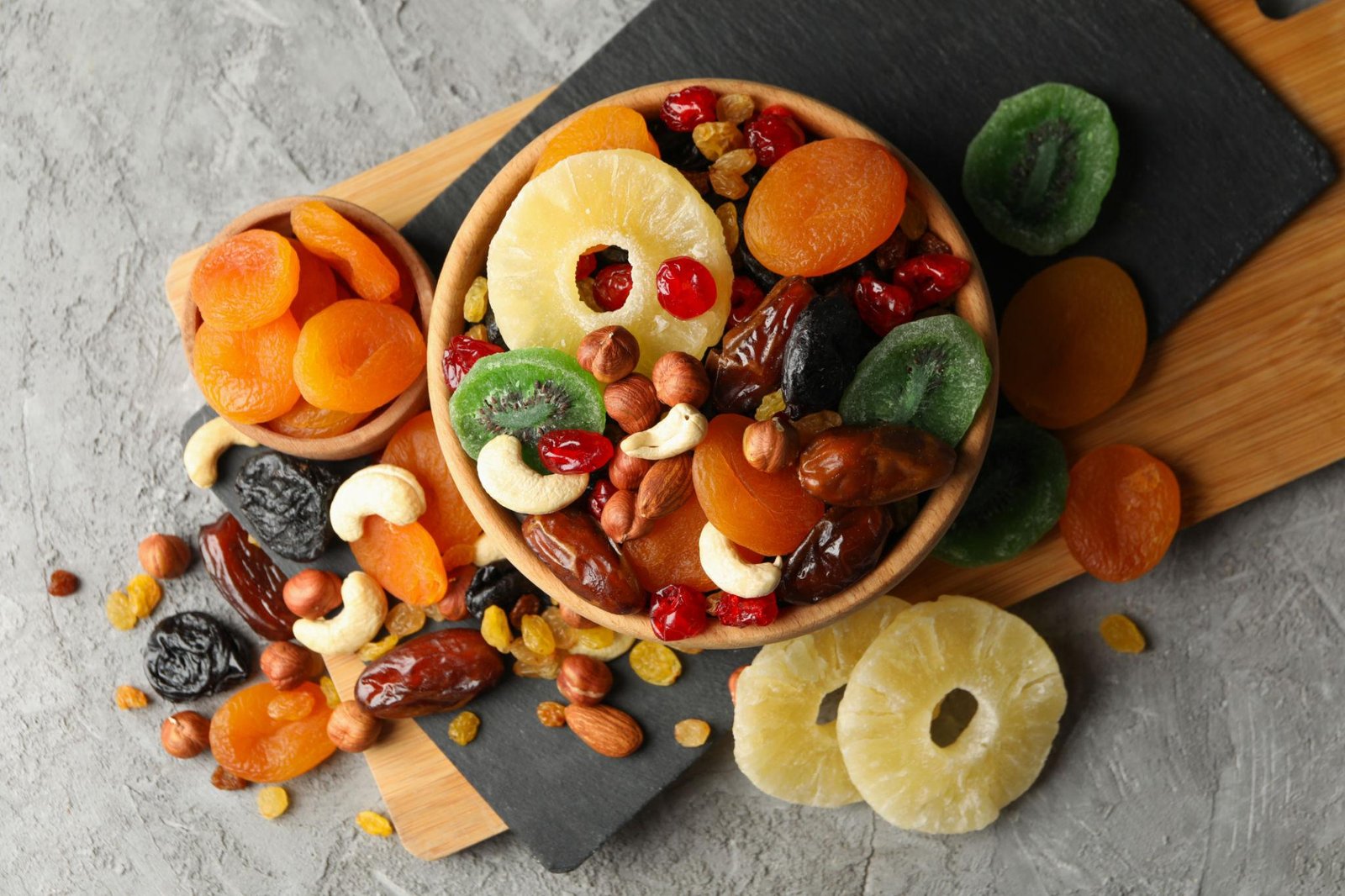
Best Dry Fruits for Summer Fitness
1. Almonds
Nutritional Value
Almonds are among the most nutrient-dense dry fruits available. They contain:
- Protein
- Vitamin E
- Magnesium
- Fiber
- Healthy fats
Benefits of Almonds in Summer
Sustained Energy
Almonds release energy slowly, helping prevent sudden drops in blood sugar levels.
Better Skin Health
Vitamin E helps protect the skin from environmental stress and supports healthy skin during hot weather.
Muscle Support
Magnesium contributes to proper muscle function and recovery.
How to Consume
Soak 5–10 almonds overnight and eat them in the morning.
Pros
- High in protein
- Supports heart health
- Rich in antioxidants
- Helps maintain energy
Cons
- High calorie content
- Excessive intake may cause digestive discomfort
2. Raisins
Nutritional Value
Raisins are dried grapes rich in:
- Iron
- Potassium
- Fiber
- Natural sugars
- Antioxidants
Benefits of Raisins in Summer
Quick Energy Source
Natural sugars provide instant energy without relying on processed snacks.
Digestive Support
Fiber helps maintain healthy digestion.
Electrolyte Balance
Potassium supports proper fluid balance and muscle function.
How to Consume
Soak 10–15 raisins overnight and eat them in the morning.
Pros
- Naturally sweet
- Easy to digest when soaked
- Supports digestive health
- Good source of antioxidants
Cons
- High sugar content
- Excessive consumption may contribute to weight gain
3. Walnuts
Nutritional Value
Walnuts are rich in:
- Omega-3 fatty acids
- Protein
- Fiber
- Copper
- Manganese
Benefits of Walnuts in Summer
Brain Health
Omega-3 fatty acids support cognitive function.
Heart Protection
Healthy fats contribute to cardiovascular wellness.
Reduced Inflammation
Antioxidants help combat inflammation and oxidative stress.
How to Consume
Eat 2–4 walnut halves daily.
Pros
- Excellent source of omega-3 fats
- Supports brain function
- Promotes heart health
Cons
- Calorie-dense
- Can be difficult to digest in excess
4. Pistachios
Nutritional Value
Pistachios contain:
- Protein
- Fiber
- Healthy fats
- Potassium
- Vitamin B6
Benefits of Pistachios in Summer
Weight Management
The combination of protein and fiber helps control appetite.
Muscle Health
Potassium supports proper muscle function.
Eye Health
Contains antioxidants that benefit vision.
How to Consume
A small handful (20–30 pistachios) makes a healthy snack.
Pros
- High protein content
- Helps maintain satiety
- Rich in antioxidants
Cons
- Salted versions may increase sodium intake
- Easy to overeat
5. Figs (Anjeer)
Nutritional Value
Figs provide:
- Fiber
- Calcium
- Potassium
- Iron
- Antioxidants
Benefits of Figs in Summer
Digestive Health
Fiber supports healthy digestion and prevents constipation.
Bone Support
Calcium contributes to stronger bones.
Natural Energy
Provides energy without processed sugars.
How to Consume
Soak 2–3 figs overnight before eating.
Pros
- Supports digestion
- Rich in minerals
- Naturally sweet
Cons
- Can cause digestive discomfort when overeaten
- Contains natural sugars
6. Cashews
Nutritional Value
Cashews contain:
- Healthy fats
- Protein
- Magnesium
- Zinc
- Iron
Benefits of Cashews in Summer
Energy Production
Healthy fats provide sustained energy.
Supports Immunity
Zinc helps maintain immune function.
Bone Health
Magnesium contributes to healthy bones and muscles.
How to Consume
Eat 5–10 cashews as part of a balanced snack.
Pros
- Creamy and delicious
- Good source of minerals
- Supports energy production
Cons
- High calorie content
- May cause weight gain if consumed excessively
7. Dates
Nutritional Value
Dates are rich in:
- Natural sugars
- Fiber
- Potassium
- Magnesium
- Antioxidants
Benefits of Dates in Summer
Instant Energy
Ideal for replenishing energy after physical activity.
Digestive Benefits
Fiber supports digestive health.
Mineral Support
Potassium helps maintain electrolyte balance.
How to Consume
Consume 1–2 dates daily during summer.
Pros
- Excellent energy source
- Rich in minerals
- Convenient snack
Cons
- High sugar content
- Not ideal in large quantities during hot weather
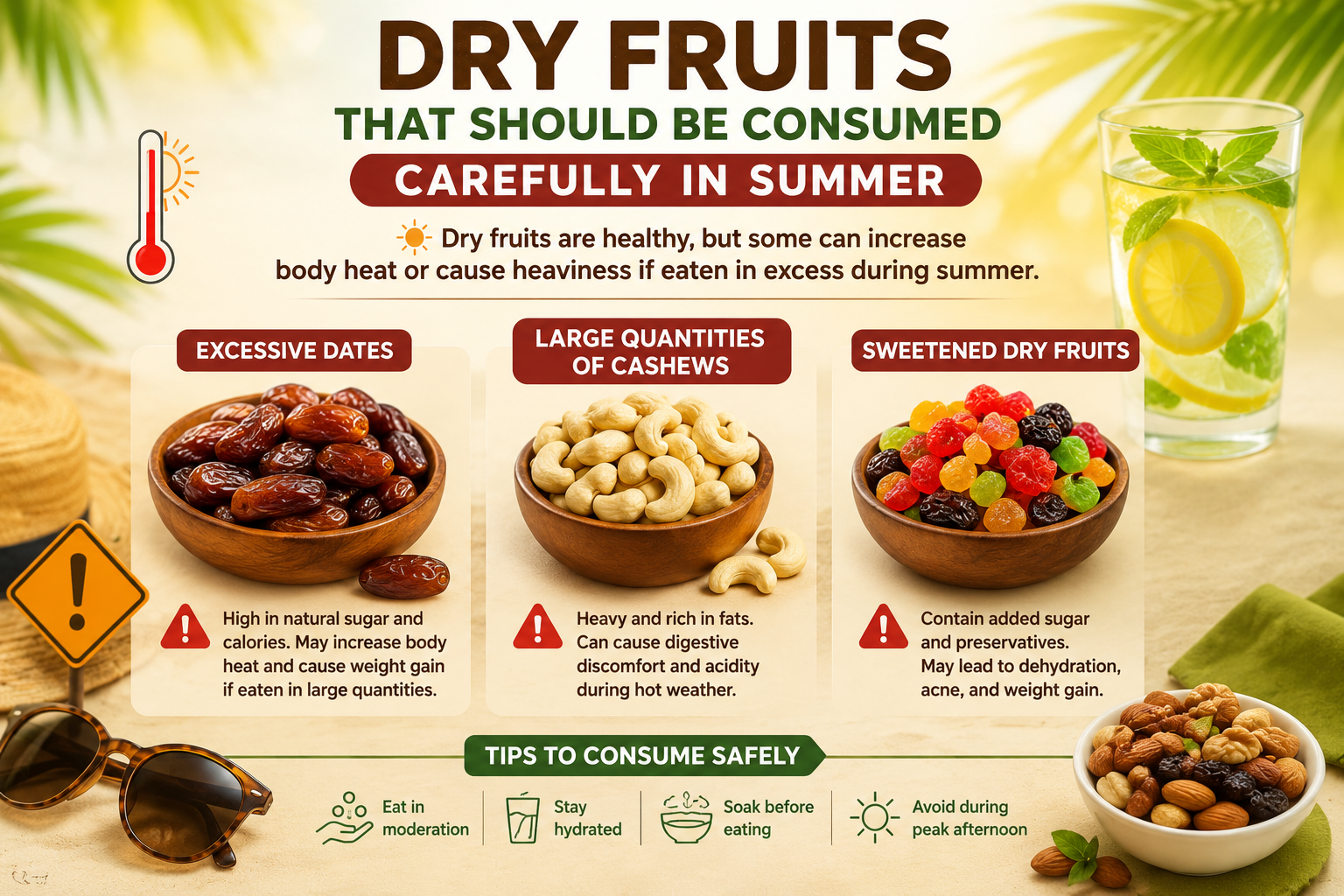
Dry Fruits That Should Be Consumed Carefully in Summer
Some dry fruits are considered warming foods and should be consumed in moderation during hot weather.
Excessive Dates
Can increase calorie intake and may feel heavy if overeaten.
Large Quantities of Cashews
May contribute to digestive discomfort and excessive calorie consumption.
Sweetened Dry Fruits
Avoid commercially sweetened or sugar-coated varieties.
Best Time to Eat Dry Fruits in Summer
Morning
The ideal time is in the morning after soaking almonds, raisins, or figs overnight.
Mid-Morning Snack
Dry fruits can be eaten between breakfast and lunch for sustained energy.
Pre-Workout
A few dates or raisins provide quick energy before exercise.
Avoid Late Night Consumption
Heavy dry fruits may be harder to digest before bedtime.
Tips for Eating Dry Fruits During Summer
Soak Before Consumption
Soaking:
- Improves digestion
- Reduces heat-producing effects
- Enhances nutrient absorption
Stay Hydrated
Always increase water intake when consuming dry fruits.
Practice Portion Control
Even healthy foods can contribute to weight gain if consumed excessively.
Choose Unsalted Varieties
Avoid excess sodium that may contribute to dehydration.
Combine with Fresh Foods
Mix dry fruits with:
- Yogurt
- Smoothies
- Fruit salads
- Oatmeal
Sample Summer Dry Fruit Diet Plan
Morning
- 5 soaked almonds
- 10 soaked raisins
- 2 soaked figs
Mid-Morning
- Seasonal fruit bowl
Afternoon Snack
- Handful of pistachios
Pre-Workout
- 1–2 dates
Evening
- Walnut and yogurt snack
This balanced approach provides nutrition without excessive calories.
Common Mistakes to Avoid
Eating Too Many Dry Fruits
More is not always better. Excessive intake can increase calorie consumption significantly.
Ignoring Hydration
Dry fruits should complement water intake, not replace it.
Choosing Sugar-Coated Products
Many packaged dry fruits contain added sugar.
Depending Solely on Dry Fruits
They should be part of a balanced diet that includes fruits, vegetables, whole grains, and proteins.
Conclusion
Dry fruits can be an excellent addition to a summer fitness diet when consumed wisely. Almonds, raisins, walnuts, pistachios, figs, cashews, and dates offer a powerful combination of nutrients that support energy production, digestion, immunity, heart health, and overall well-being. Their rich vitamin, mineral, and antioxidant content makes them valuable foods for maintaining fitness during hot weather.
However, moderation remains essential. Since dry fruits are calorie-dense and some varieties contain high amounts of natural sugars, portion control is important. Soaking certain dry fruits before consumption can improve digestion and make them more suitable for summer.
When combined with adequate hydration, regular physical activity, and a balanced diet, dry fruits can help you stay energetic, healthy, and fit throughout the summer season.