




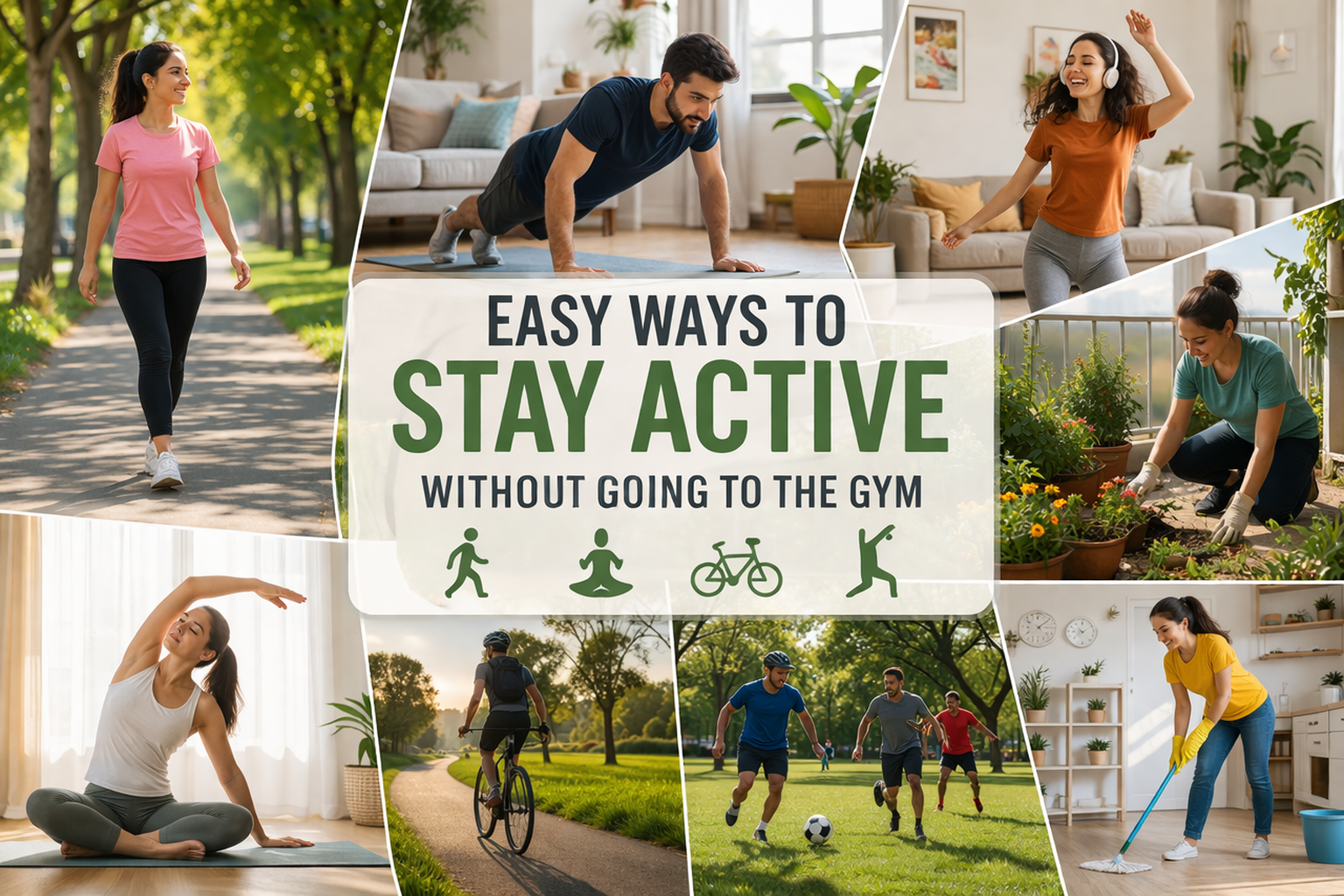
Staying active is often associated with gym memberships, workout machines, and strict routines. But the truth is, you don’t need a gym to stay fit. Many people either don’t enjoy gym environments, don’t have the time, or simply prefer more flexible ways to move their bodies. The good news is that staying active can be simple, practical, and even enjoyable when you build it into your daily life.
This article explores easy and realistic ways to stay active without going to the gym. These ideas are designed for everyday people who want to improve their health without making life complicated.
1. Turn Walking Into a Daily Habit
Walking is one of the easiest and most effective forms of exercise. It requires no equipment, no special skills, and can be done almost anywhere.
You can start by walking for 15 to 20 minutes a day and gradually increase your time. Instead of taking a vehicle for short distances, consider walking. Use stairs instead of elevators whenever possible.
Even small changes, like walking while talking on the phone or taking a short walk after meals, can add up over time. Walking regularly improves heart health, boosts mood, and helps maintain a healthy weight.
2. Use Household Chores as Exercise
Many daily chores involve physical movement. Cleaning, sweeping, mopping, gardening, and even washing your car can burn calories and keep your body active.
Instead of seeing chores as boring tasks, treat them as mini workouts. For example, scrubbing floors engages your arms and core, while gardening involves bending, lifting, and stretching.
Doing chores with energy and intention can turn ordinary activities into effective physical movement.
3. Try Home Workouts Without Equipment
You don’t need expensive equipment to exercise at home. Simple bodyweight exercises can be very effective.
Some examples include:
- Push-ups
- Squats
- Lunges
- Planks
- Jumping jacks
You can create a short routine of 15 to 30 minutes and do it at your convenience. Online videos and apps also provide guided workouts that require little to no equipment.
Home workouts are flexible and save time, making it easier to stay consistent.
4. Stay Active While Watching TV
Many people spend hours sitting while watching TV or using their phones. This time can be used more actively.
You can do light exercises during breaks or even while watching your favorite shows. Stretching, squats, or simple movements like marching in place can make a difference.
This approach helps reduce long periods of sitting and adds activity without taking extra time out of your day.
5. Make Use of Outdoor Spaces
Parks, open fields, and even your neighborhood streets can be great places to stay active. Outdoor activities not only improve physical health but also boost mental well-being.
You can:
- Jog or run
- Cycle
- Play sports like badminton or football
- Practice yoga in a park
Fresh air and sunlight can improve mood and reduce stress, making outdoor activity more enjoyable than indoor workouts for many people.
6. Dance Your Way to Fitness
Dancing is a fun and effective way to stay active. You don’t need formal training or a studio. Just play your favorite music and move freely.
Dancing improves coordination, flexibility, and cardiovascular health. It also lifts your mood and reduces stress.
You can dance alone at home or with friends and family. The key is to enjoy the movement rather than focus on perfection.
7. Incorporate Movement Into Your Workday
Many people spend long hours sitting at a desk. This can lead to a sedentary lifestyle.
Try to add small movements throughout your workday:
- Stand up and stretch every hour
- Walk during phone calls
- Use a standing desk if possible
- Take short breaks to move around
These small actions help reduce stiffness and improve circulation.
8. Practice Yoga and Stretching
Yoga is a gentle yet powerful way to stay active. It improves flexibility, balance, and mental focus.
You can start with basic poses and gradually explore more advanced ones. Even 10 to 15 minutes of stretching daily can make a noticeable difference.
Yoga is especially helpful for people who prefer low-impact activities.
9. Engage in Active Hobbies
Hobbies don’t have to be passive. Many activities you enjoy can also keep you physically active.
Some examples include:
- Gardening
- Playing outdoor games
- Hiking
- Cycling
- Swimming
Choosing hobbies that involve movement helps you stay active without feeling like you are exercising.
10. Stay Consistent With Small Steps
The most important part of staying active is consistency. You don’t need to do intense workouts every day.
Start small and build gradually. Even 10 minutes of movement is better than none. Over time, these small efforts become habits.
Set realistic goals and focus on progress rather than perfection. Staying active should feel like a natural part of your life, not a burden.
Pros of Staying Active Without the Gym
- Cost-effective: No need for expensive memberships or equipment
- Flexible schedule: Exercise anytime that suits you
- Comfortable environment: No pressure or crowded spaces
- Sustainable habits: Easier to maintain long-term
- Accessible: Suitable for all age groups and fitness levels
Cons of Staying Active Without the Gym
- Lack of structure: It can be harder to stay disciplined
- Limited equipment: Some advanced workouts may not be possible
- Motivation challenges: No trainer or group support
- Distractions at home: Easier to skip workouts
- Slower progress for some goals: Like muscle building
Final Words
Staying active does not require a gym, fancy equipment, or strict routines. What matters most is movement and consistency. By making small changes in your daily life, you can improve your health, boost your energy, and feel better overall.
The key is to choose activities you enjoy. When movement feels natural and fun, it becomes easier to stick with it. Whether it’s walking, dancing, doing chores, or practicing yoga, every step counts.
In the end, an active lifestyle is not about where you exercise, but how regularly you move. Start simple, stay consistent, and let your lifestyle support your well-being.