





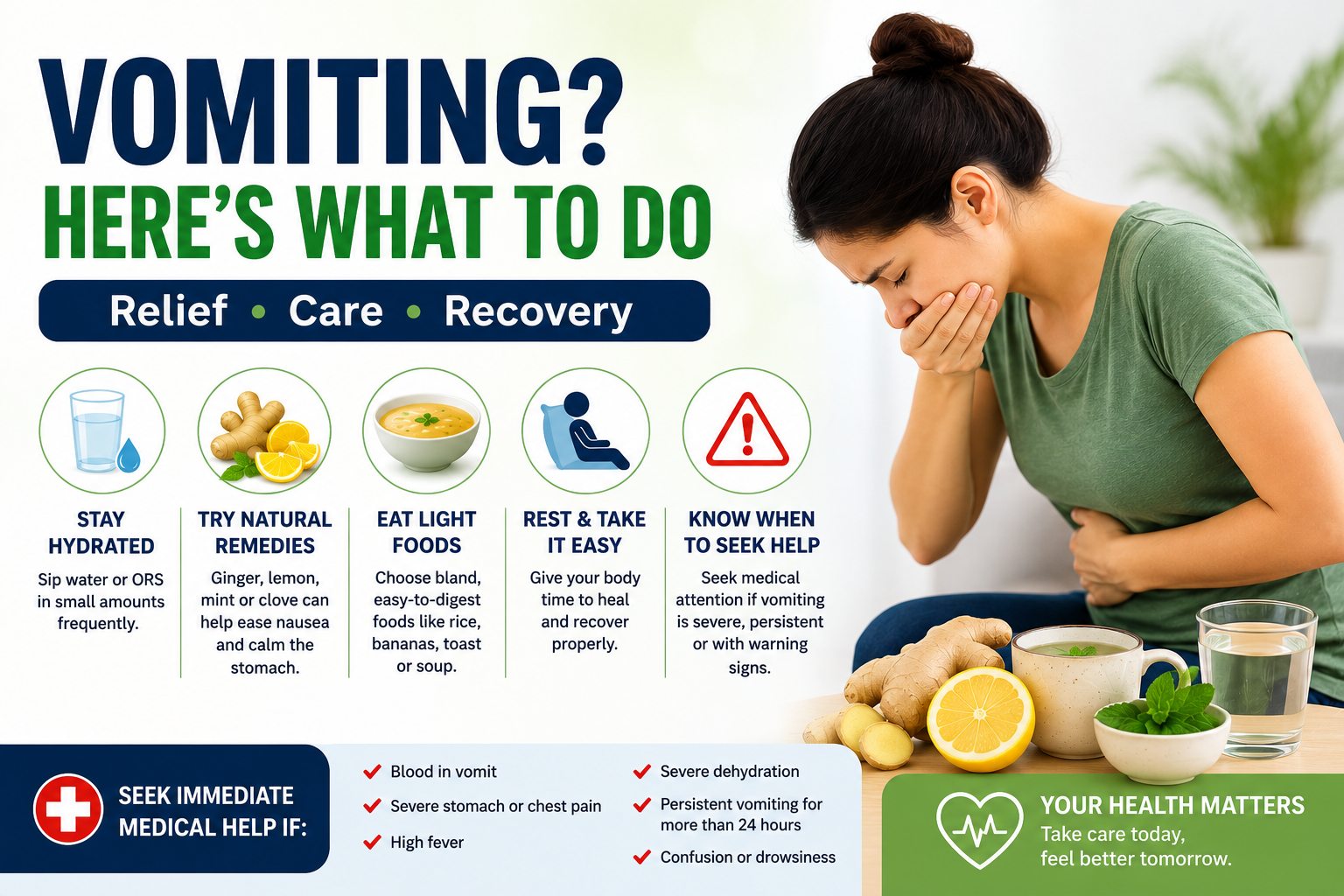
Vomiting is a common health problem that almost everyone experiences at some point in life. It can happen due to food poisoning, viral infections, motion sickness, overeating, acidity, stress, pregnancy, migraines, or stomach disorders. While occasional vomiting may not be serious, repeated vomiting can lead to dehydration, weakness, and other complications if not managed properly.
Understanding what to do during vomiting can help you recover faster and prevent your condition from worsening. This article explains the causes of vomiting, immediate remedies, home treatments, foods to eat and avoid, and signs that indicate you should seek medical attention.
What Is Vomiting?
Vomiting is the forceful expulsion of stomach contents through the mouth. It is the body’s natural way of removing harmful substances or reacting to irritation in the stomach or digestive system. Vomiting is often accompanied by nausea, stomach discomfort, sweating, weakness, or dizziness.
Although vomiting itself is not usually dangerous, continuous vomiting can result in dehydration and electrolyte imbalance.
Common Causes of Vomiting
There are many reasons why someone may experience vomiting. Some of the most common causes include:
1. Food Poisoning
Eating contaminated or spoiled food can irritate the stomach and lead to vomiting, diarrhea, stomach cramps, and fever.
2. Viral Gastroenteritis (Stomach Flu)
Viral infections affecting the stomach and intestines are a major cause of vomiting in both children and adults.
3. Acidity and Indigestion
Excess stomach acid, overeating, spicy food, or irregular eating habits can trigger nausea and vomiting.
4. Motion Sickness
Traveling in cars, buses, ships, or airplanes may cause vomiting due to disturbance in balance signals sent to the brain.
5. Pregnancy
Morning sickness during early pregnancy commonly causes nausea and vomiting.
6. Stress and Anxiety
Emotional stress, panic attacks, or anxiety can sometimes upset the stomach and lead to vomiting.
7. Migraine
Severe headaches and migraines may trigger nausea and vomiting.
8. Alcohol Consumption
Excessive alcohol intake irritates the stomach lining and can cause vomiting.
9. Medication Side Effects
Certain medicines such as antibiotics, painkillers, or chemotherapy drugs may cause nausea and vomiting.
10. Serious Medical Conditions
In rare cases, vomiting may be linked to appendicitis, ulcers, gallbladder disease, kidney infections, or neurological disorders.
Immediate Steps to Take When Vomiting
If you are vomiting, taking the right steps can help reduce discomfort and prevent dehydration.
1. Rest Your Stomach
Avoid eating immediately after vomiting. Give your stomach some time to settle. Wait around 30 minutes before drinking or eating anything.
2. Stay Hydrated
Vomiting causes fluid loss, so it is important to replace lost fluids gradually.
Take small sips of:
- Water
- ORS (Oral Rehydration Solution)
- Coconut water
- Clear soups
- Electrolyte drinks
Do not drink too much at once because it may trigger more vomiting.
3. Eat Light Foods
Once vomiting reduces, start with bland and easy-to-digest foods such as:
- Bananas
- Rice
- Toast
- Crackers
- Applesauce
- Boiled potatoes
These foods are gentle on the stomach.
4. Avoid Strong Smells
Strong odors from food, perfumes, or smoke can worsen nausea.
5. Sit Upright
Lying flat may increase nausea or acid reflux. Sit upright or rest with your head elevated.
6. Get Fresh Air
Fresh air can help reduce nausea and discomfort.
Best Home Remedies for Vomiting
Many simple home remedies can help relieve nausea and vomiting naturally.
Ginger
Ginger
Ginger is one of the most effective natural remedies for nausea and vomiting. It helps calm the stomach and improve digestion.
Ways to use ginger:
- Ginger tea
- Small piece of fresh ginger
- Ginger candy
- Ginger water
Lemon
Lemon
The fresh smell and acidity of lemon may help control nausea.
You can:
- Smell fresh lemon
- Drink lemon water
- Add lemon to warm water with honey
Mint
Mint
Mint helps relax stomach muscles and improve digestion.
Try:
- Mint tea
- Fresh mint leaves
- Peppermint candies
Clove
Clove
Clove may reduce nausea and stomach irritation. Chewing one clove or drinking clove tea may help.
Rice Water
Rice water is light on the stomach and may help during vomiting caused by gastritis or food poisoning.
Coconut Water
Coconut Water
Coconut water helps restore electrolytes and prevents dehydration.
Foods to Eat After Vomiting
Your stomach becomes sensitive after vomiting, so choosing the right foods is important.
Recommended Foods
- Plain rice
- Toast
- Bananas
- Oatmeal
- Boiled vegetables
- Soup
- Khichdi
- Plain curd
- Applesauce
These foods are mild and easier to digest.
Foods to Avoid
Certain foods can irritate the stomach further and worsen vomiting.
Avoid:
- Oily foods
- Fried foods
- Spicy dishes
- Fast food
- Alcohol
- Caffeine
- Dairy products (if they worsen symptoms)
- Sugary drinks
- Heavy meals
How to Prevent Dehydration
One of the biggest risks of repeated vomiting is dehydration.
Signs of dehydration include:
- Dry mouth
- Dizziness
- Dark urine
- Weakness
- Less urination
- Extreme thirst
To prevent dehydration:
- Sip fluids slowly
- Use ORS
- Avoid caffeinated drinks
- Drink electrolyte-rich fluids
Vomiting in Children
Children can become dehydrated very quickly during vomiting.
Parents should:
- Give ORS in small amounts frequently
- Avoid forcing food
- Continue breastfeeding if applicable
- Monitor urination
- Watch for fever or lethargy
Seek medical help if the child:
- Cannot keep fluids down
- Becomes unusually sleepy
- Has dry lips and no tears
- Vomits continuously
Vomiting During Pregnancy
Morning sickness is common during early pregnancy.
Pregnant women can try:
- Eating small meals frequently
- Avoiding spicy foods
- Eating crackers in the morning
- Drinking ginger tea
- Staying hydrated
Medical advice may be needed if vomiting becomes severe or causes dehydration.
When Vomiting May Be Serious
Sometimes vomiting can indicate a more serious health problem.
Seek immediate medical attention if vomiting is accompanied by:
- Blood in vomit
- Severe stomach pain
- Chest pain
- Difficulty breathing
- High fever
- Confusion
- Severe dehydration
- Persistent vomiting for more than 24 hours
- Severe headache
- Stiff neck
These symptoms should not be ignored.
Medical Treatment for Vomiting
Doctors may recommend treatments depending on the cause of vomiting.
Common treatments include:
- Anti-nausea medications
- IV fluids for dehydration
- Antibiotics (if bacterial infection is present)
- Acid-reducing medicines
- Treatment for underlying illness
Never self-medicate excessively without professional guidance.
Tips for Faster Recovery
To recover quickly from vomiting:
- Rest properly
- Stay hydrated
- Eat light meals
- Avoid smoking and alcohol
- Avoid stress
- Sleep adequately
- Slowly return to normal eating
Your body needs time to recover.
Can Stress Cause Vomiting?
Yes, emotional stress and anxiety can affect the digestive system. Stress-related vomiting is often linked with:
- Nervousness
- Panic attacks
- Fear
- Emotional trauma
Managing stress through meditation, breathing exercises, proper sleep, and relaxation techniques may help reduce symptoms.
Is Vomiting Always Caused by Stomach Problems?
No. Vomiting can also occur due to:
- Migraines
- Inner ear problems
- Brain-related conditions
- Pregnancy
- Motion sickness
- Medication side effects
That is why persistent vomiting should always be evaluated properly.
Natural Ways to Reduce Nausea
You can also try these methods:
- Deep breathing
- Acupressure wrist bands
- Cold compress on forehead
- Chamomile tea
- Avoiding heavy smells
Small lifestyle changes often make a big difference.
Conclusion
Vomiting is a common symptom that can result from infections, indigestion, food poisoning, stress, pregnancy, or other medical conditions. Most mild cases improve with rest, hydration, and light foods. Home remedies such as ginger, lemon, mint, and coconut water may also help soothe the stomach naturally.
However, repeated vomiting should never be ignored because it can quickly lead to dehydration and weakness. Paying attention to warning signs like blood in vomit, severe pain, fever, or persistent vomiting is important.
The best approach is to rest, drink fluids slowly, avoid heavy foods, and allow the body time to recover. If symptoms become severe or continue for a long time, seeking medical attention is essential.
Taking proper care during vomiting can help prevent complications and support faster recovery.