





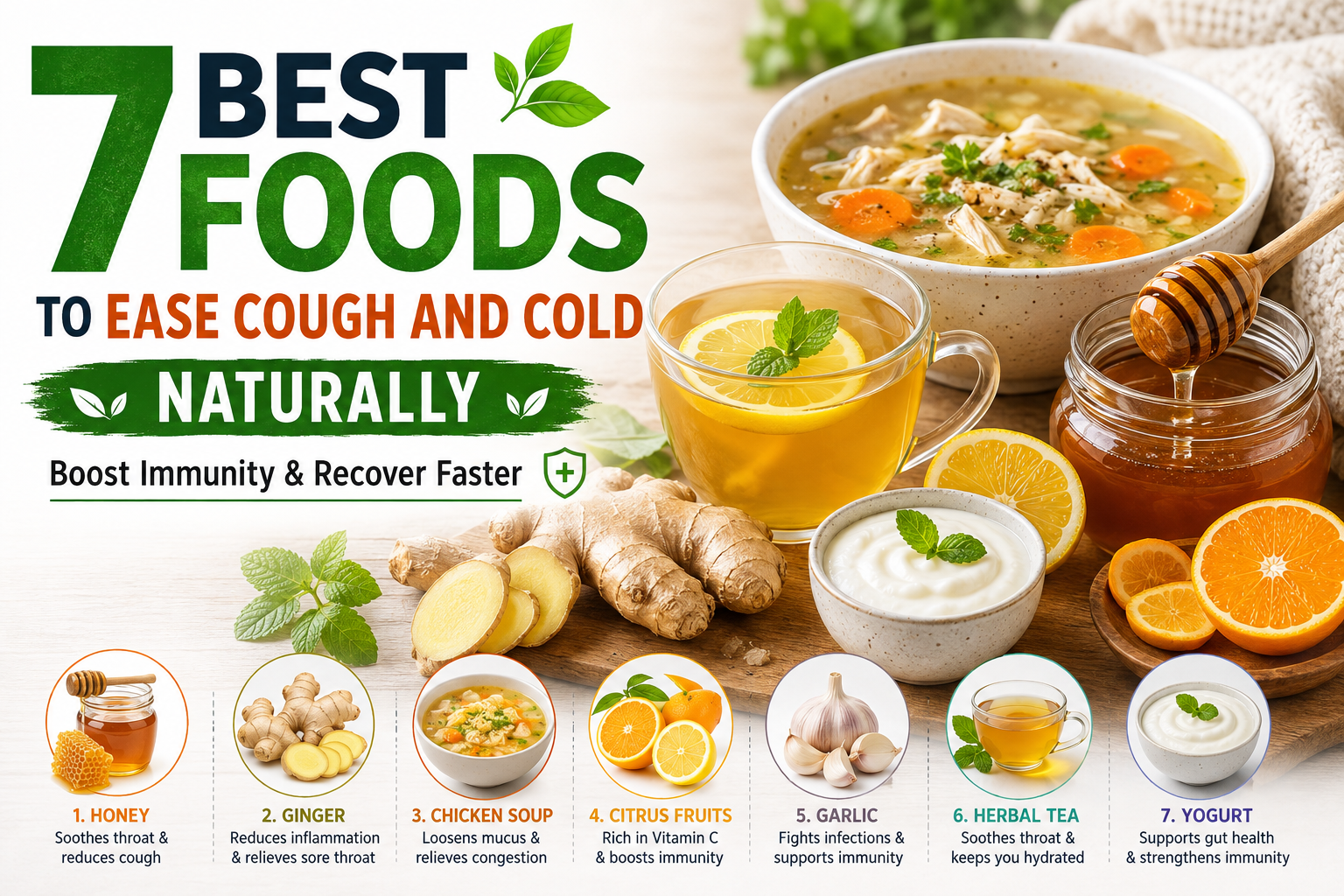
Coughs and colds are among the most common illnesses affecting people of all ages. Whether it’s caused by seasonal changes, viral infections, or weakened immunity, dealing with a sore throat, blocked nose, and persistent cough can make everyday life uncomfortable. While there is no instant cure for the common cold, eating the right foods can help your body recover faster, soothe irritation, strengthen your immune system, and reduce symptoms naturally.
Nutrition plays an important role in supporting the immune system during illness. Certain foods contain vitamins, minerals, antioxidants, and natural antibacterial compounds that help your body fight infections while providing comfort and hydration.
In this article, we’ll explore the 7 best foods to ease your cough and cold, explain why they work, and share simple ways to include them in your diet.
Why Diet Matters During a Cold
When you’re sick, your immune system works harder to fight the virus. Your body also loses more fluids through fever, sweating, and mucus production. Eating nutritious foods can:
- Strengthen immunity
- Reduce inflammation
- Keep your body hydrated
- Soothe sore throats
- Loosen mucus
- Provide energy for recovery
- Shorten the duration of symptoms
Instead of relying only on medications, combining proper nutrition with adequate rest and hydration can significantly improve recovery.
1. Honey
Honey has been used as a natural remedy for coughs for centuries. It contains antimicrobial, antiviral, and antioxidant properties that help soothe throat irritation and reduce coughing.
Benefits
- Coats the throat to reduce irritation
- Helps suppress nighttime coughing
- Contains antioxidants that support immunity
- Has mild antibacterial properties
- Promotes faster healing
Several studies suggest that honey can be as effective as some over-the-counter cough syrups for relieving nighttime coughs in children over one year old and adults.
How to Use Honey
- Mix one tablespoon of honey in warm water.
- Add it to herbal tea.
- Combine honey with lemon juice.
- Take one teaspoon before bedtime.
Important: Never give honey to infants under one year of age because of the risk of infant botulism.
2. Ginger
Ginger is one of the most powerful natural remedies for coughs and colds. It contains compounds called gingerols and shogaols that possess anti-inflammatory and antioxidant properties.
Benefits
- Relieves sore throat
- Helps reduce coughing
- Reduces inflammation
- Supports digestion
- May help relieve nausea during illness
Warm ginger tea can provide immediate relief from throat irritation while helping to keep the body hydrated.
Ways to Eat Ginger
- Fresh ginger tea
- Ginger and honey mixture
- Add grated ginger to soups
- Ginger-infused warm water
- Ginger with lemon
Fresh ginger is generally more effective than processed ginger products because it contains higher levels of active compounds.
3. Chicken Soup
Chicken soup isn’t just comfort food—science suggests it may actually help reduce cold symptoms.
The combination of warm broth, vegetables, herbs, and chicken provides hydration, vitamins, protein, and warmth that help ease congestion.
Benefits
- Keeps the body hydrated
- Loosens mucus
- Relieves nasal congestion
- Provides lean protein
- Supplies essential minerals
- Easy to digest
Warm steam from soup can also help open blocked nasal passages, making breathing easier.
Best Ingredients to Add
- Chicken
- Garlic
- Onion
- Carrots
- Celery
- Ginger
- Black pepper
- Turmeric
A homemade chicken soup is usually healthier than canned varieties because it contains less sodium and preservatives.
4. Citrus Fruits
Vitamin C is one of the most popular nutrients associated with immunity.
Although vitamin C doesn’t completely prevent colds, research suggests it may reduce the severity and duration of symptoms in some people.
Best Citrus Fruits
- Oranges
- Lemons
- Sweet lime
- Grapefruit
- Tangerines
Benefits
- Rich in Vitamin C
- Supports immune function
- Contains antioxidants
- Helps maintain hydration
- Reduces oxidative stress
Lemon mixed with warm water and honey is a classic home remedy that helps soothe sore throats and loosen mucus.
If your throat feels extremely sore, avoid overly acidic juices, as they may temporarily increase irritation.
5. Garlic
Garlic has long been recognized for its medicinal properties.
Its active compound, allicin, has antimicrobial and immune-supporting effects that may help your body fight infections more effectively.
Benefits
- Supports immune health
- Natural antibacterial properties
- Natural antiviral effects
- May reduce cold severity
- Helps fight inflammation
Easy Ways to Include Garlic
- Add crushed garlic to soups
- Mix into vegetable broth
- Add to stir-fried vegetables
- Use in homemade herbal drinks
Crushing garlic and allowing it to sit for a few minutes before cooking helps maximize allicin formation.
6. Warm Herbal Tea
Herbal teas provide hydration while soothing irritated airways.
Unlike sugary beverages, herbal teas contain beneficial plant compounds that may help reduce inflammation and improve comfort.
Best Herbal Teas
Chamomile Tea
- Promotes relaxation
- Supports sleep
- Reduces throat irritation
Ginger Tea
- Relieves cough
- Helps digestion
- Reduces inflammation
Peppermint Tea
- Opens nasal passages
- Refreshes breathing
- May ease congestion
Tulsi (Holy Basil) Tea
- Supports immunity
- Traditionally used for respiratory health
- Rich in antioxidants
Turmeric Tea
- Contains curcumin
- Anti-inflammatory properties
- Helps soothe throat discomfort
Adding honey to warm tea can further improve cough relief.
7. Yogurt
Many people mistakenly avoid yogurt during a cold, but plain yogurt containing live probiotic cultures can actually benefit immune health.
Probiotics support the balance of beneficial bacteria in the gut, which plays an important role in overall immunity.
Benefits
- Supports gut health
- Helps strengthen immunity
- Rich in protein
- Provides calcium
- Easy to eat when appetite is low
Choose plain, unsweetened yogurt rather than flavored varieties high in added sugar.
If dairy seems to increase mucus production for you personally, opt for probiotic-rich alternatives such as kefir or consult your healthcare provider.
Other Helpful Foods During a Cold
Besides the seven foods above, several other nutritious foods can support recovery.
Bananas
Easy to digest and rich in potassium, bananas provide energy when your appetite is poor.
Oatmeal
Warm oatmeal is filling, soothing, and provides fiber, vitamins, and minerals.
Turmeric
Curcumin, the active compound in turmeric, has anti-inflammatory properties.
Spinach
Rich in Vitamin A, Vitamin C, iron, and antioxidants.
Sweet Potatoes
Contain beta-carotene, which supports immune function.
Berries
Blueberries, strawberries, and raspberries are packed with antioxidants.
Foods to Avoid During a Cold
Certain foods may worsen symptoms or slow recovery.
Avoid:
- Sugary drinks
- Excess sweets
- Deep-fried foods
- Highly processed snacks
- Excess alcohol
- Too much caffeine
- Very spicy foods if they irritate your throat
Eating balanced meals is generally more beneficial than consuming heavily processed foods while recovering.
Stay Hydrated
Hydration is just as important as nutrition.
Drink plenty of:
- Water
- Warm lemon water
- Coconut water
- Herbal teas
- Clear soups
- Vegetable broth
Proper hydration helps thin mucus, making it easier to clear congestion.
Lifestyle Tips for Faster Recovery
Food alone cannot cure a cold. Combine healthy eating with these habits:
- Get plenty of sleep.
- Drink enough fluids.
- Wash your hands frequently.
- Gargle with warm salt water for sore throat relief.
- Avoid smoking and secondhand smoke.
- Use a humidifier if indoor air is dry.
- Eat small, nutritious meals throughout the day.
These simple measures can support your immune system and help you feel better sooner.
When Should You See a Doctor?
Most coughs and colds improve within 7–10 days. However, seek medical advice if you experience:
- Fever lasting more than three days
- Difficulty breathing
- Chest pain
- Persistent cough lasting more than three weeks
- Coughing up blood
- Severe dehydration
- Symptoms that worsen instead of improving
- High fever in young children or older adults
Prompt medical evaluation is especially important for infants, elderly individuals, pregnant women, and people with weakened immune systems.
Frequently Asked Questions (FAQs)
1. Can food cure a cough and cold?
No. Most colds are caused by viruses, and there is no instant cure. However, nutritious foods can support your immune system, reduce symptoms, and help your body recover more comfortably.
2. Is honey better than cough syrup?
For many adults and children over one year old, honey may help reduce coughing, especially at night. However, severe or persistent symptoms should be evaluated by a healthcare professional.
3. Should I avoid dairy during a cold?
There is no strong evidence that dairy increases mucus production for most people. If dairy personally seems to worsen your symptoms, you may choose alternatives temporarily.
4. Does Vitamin C prevent colds?
Vitamin C is unlikely to prevent colds in most people, but regular intake may slightly reduce the duration or severity of symptoms.
5. Which drink is best during a cold?
Warm herbal teas, water, clear soups, and warm lemon-honey water are excellent choices for staying hydrated and soothing the throat.
Conclusion
Recovering from a cough and cold isn’t just about taking medicine—your diet plays a vital role too. Foods such as honey, ginger, chicken soup, citrus fruits, garlic, herbal tea, and yogurt provide valuable nutrients that support your immune system, soothe irritated airways, and help your body heal naturally.
Along with eating these healthy foods, remember to stay hydrated, get enough rest, and practice good hygiene. Most common colds resolve on their own within a week or two, but proper nutrition can make the recovery process much more comfortable.
Choosing wholesome, nutrient-rich foods is one of the simplest and most effective ways to support your body’s natural defenses and get back to feeling your best.