



Heart disease is one of the leading causes of death worldwide, but the good news is that it is largely preventable. With the right lifestyle choices, awareness, and regular care, you can significantly reduce your risk and lead a long, healthy life.
In this comprehensive guide, we’ll explore practical, science-backed ways to prevent heart disease and maintain optimal cardiovascular health.
🧠 Understanding Heart Disease
Heart disease refers to various conditions affecting the heart, including:
- Coronary artery disease (blocked arteries)
- Heart attack
- Stroke
- High blood pressure (hypertension)
These conditions often develop over time due to unhealthy habits and underlying health issues.
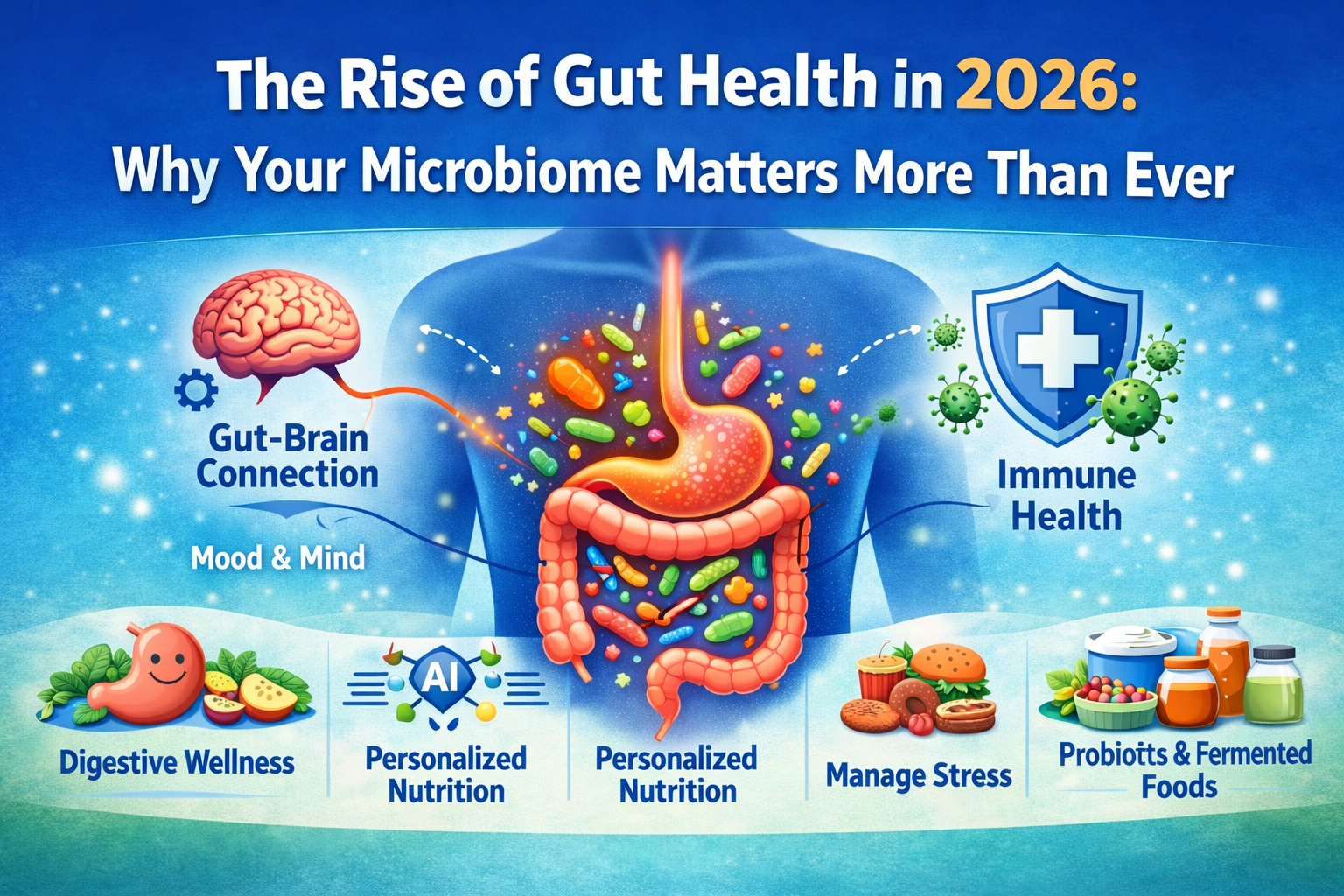
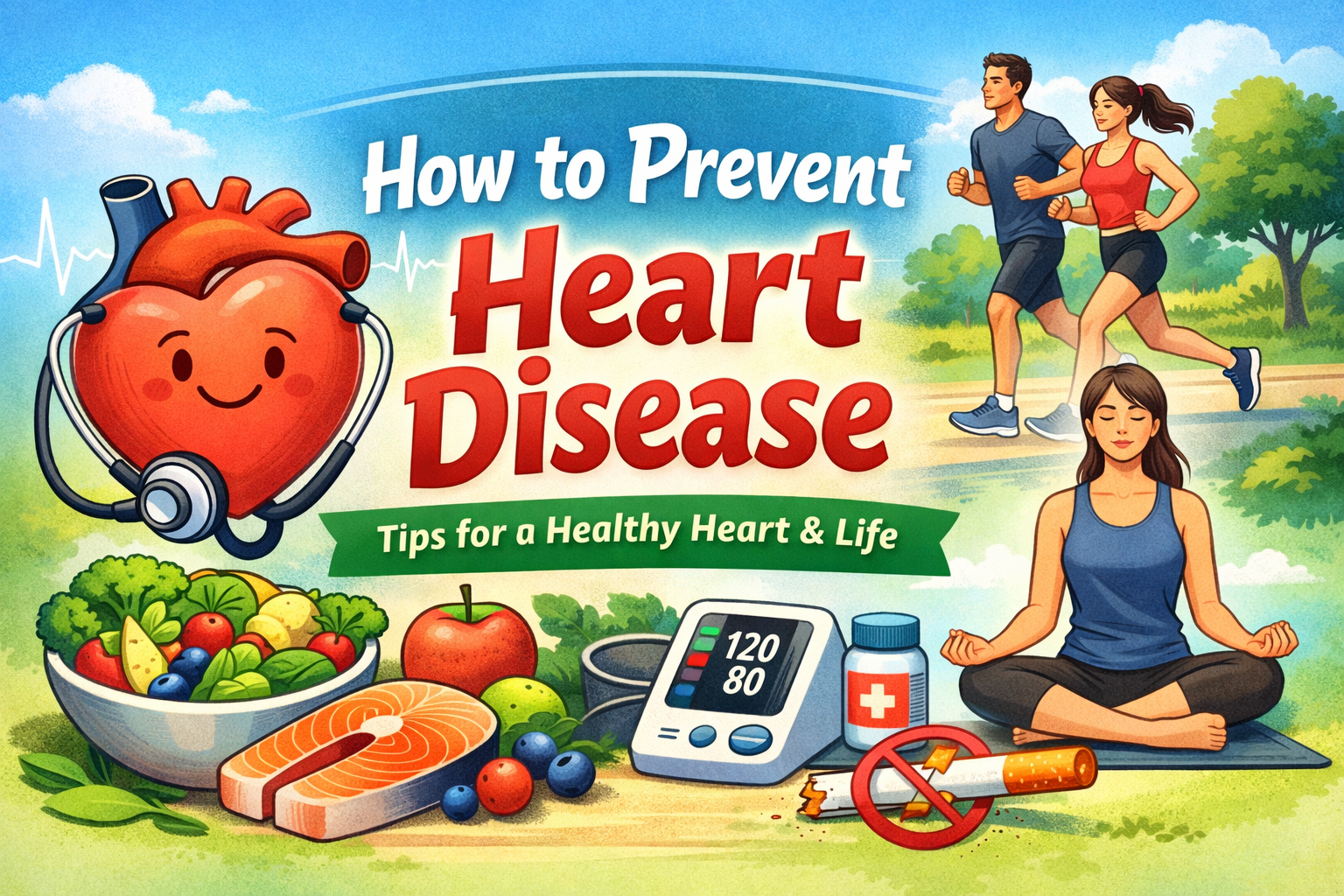
🥗 1. Eat a Heart-Healthy Diet
Your diet plays a major role in heart health.
✅ What to Eat:
- Fruits and vegetables (rich in antioxidants)
- Whole grains (brown rice, oats)
- Healthy fats (nuts, seeds, olive oil)
- Lean protein (fish, chicken, legumes)
❌ What to Avoid:
- Trans fats and saturated fats
- Excess sugar
- Processed and junk food
- Too much salt
👉 Tip: Follow the Mediterranean diet, known for reducing heart disease risk.
🏃 2. Stay Physically Active
Regular exercise strengthens the heart and improves blood circulation.
Recommended Activity:
- At least 150 minutes of moderate exercise per week
- Activities: walking, jogging, cycling, swimming, yoga
Benefits:
- Controls weight
- Lowers blood pressure
- Reduces bad cholesterol (LDL)
- Increases good cholesterol (HDL)
⚖️ 3. Maintain a Healthy Weight
Being overweight increases your risk of:
- High blood pressure
- Diabetes
- High cholesterol
Tips:
- Eat portion-controlled meals
- Avoid late-night eating
- Combine diet + exercise
👉 Even losing 5–10% of body weight can improve heart health.
🚭 4. Avoid Smoking and Tobacco
Smoking is one of the biggest risk factors for heart disease.
Effects:
- Damages blood vessels
- Reduces oxygen supply
- Increases blood pressure
👉 Quitting smoking:
- Improves heart health within weeks
- Reduces heart attack risk significantly
🍷 5. Limit Alcohol Intake
Excess alcohol can:
- Raise blood pressure
- Increase calorie intake
- Lead to heart failure
Safe Limit:
- Men: 1–2 drinks/day
- Women: 1 drink/day
👉 Best option: Limit or avoid alcohol completely.
😌 6. Manage Stress Effectively
Chronic stress contributes to heart problems.
Stress Management Techniques:
- Meditation and deep breathing
- Yoga
- Spending time with family
- Hobbies and relaxation
👉 Tip: Practice 10–15 minutes of mindfulness daily.
🩺 7. Monitor Blood Pressure and Cholesterol
High blood pressure and cholesterol often have no symptoms, but can silently damage your heart.
Ideal Levels:
- Blood Pressure: ~120/80 mmHg
- Cholesterol: Keep LDL low, HDL high
👉 Get regular health checkups, especially after age 30.
🍬 8. Control Blood Sugar Levels
Diabetes significantly increases heart disease risk.
Tips:
- Reduce sugar intake
- Eat low glycemic foods
- Exercise regularly
- Monitor glucose levels
😴 9. Get Enough Sleep
Poor sleep affects heart health.
Recommended:
- 7–9 hours of quality sleep per night
Risks of poor sleep:
- High blood pressure
- Obesity
- Stress
💊 10. Take Medications as Prescribed
If you have conditions like:
- Hypertension
- Diabetes
- High cholesterol
👉 Follow your doctor’s advice strictly.
Skipping medication can increase risk.
🚶 11. Adopt Daily Healthy Habits
Small habits make a big difference:
- Drink plenty of water
- Avoid sitting for long hours
- Take breaks during work
- Stay socially connected
⚠️ Early Warning Signs to Watch
Seek medical help if you notice:
- Chest pain or discomfort
- Shortness of breath
- Fatigue
- Irregular heartbeat
🏁 Conclusion
Preventing heart disease is not about drastic changes—it’s about consistent healthy choices every day.
By:
- Eating well
- Staying active
- Managing stress
- Avoiding harmful habits
You can protect your heart and live a longer, healthier life.
💡 Final Tip
Start small:
👉 Walk daily
👉 Replace junk food with healthy options
👉 Sleep better
Your heart will thank you ❤️