





For generations in India, skincare has been deeply influenced by Ayurveda. From grandma’s turmeric packs to neem-infused oils, most of us grew up believing that nature holds the ultimate solution to all skin concerns. Ayurveda wasn’t just a skincare routine—it was a way of life, rooted in balance, healing, and long-term wellness.
However, over the last decade, a new beauty wave has taken over Indian vanities: Korean skincare. With its glass-skin goals, innovative ingredients, and aesthetically pleasing routines, K-beauty has quickly found loyal followers among Indian women. This shift raises an important question: Is Korean skincare better than Ayurvedic skincare for Indian (desi) skin—or is it the other way around?
To answer that, let’s understand both approaches and see how they perform on Indian skin types.
What Is Ayurvedic Skincare?
Ayurvedic skincare originates from Ayurveda, India’s 5,000-year-old holistic healing system. It is based on the belief that healthy skin is a reflection of internal balance—between body, mind, and lifestyle.
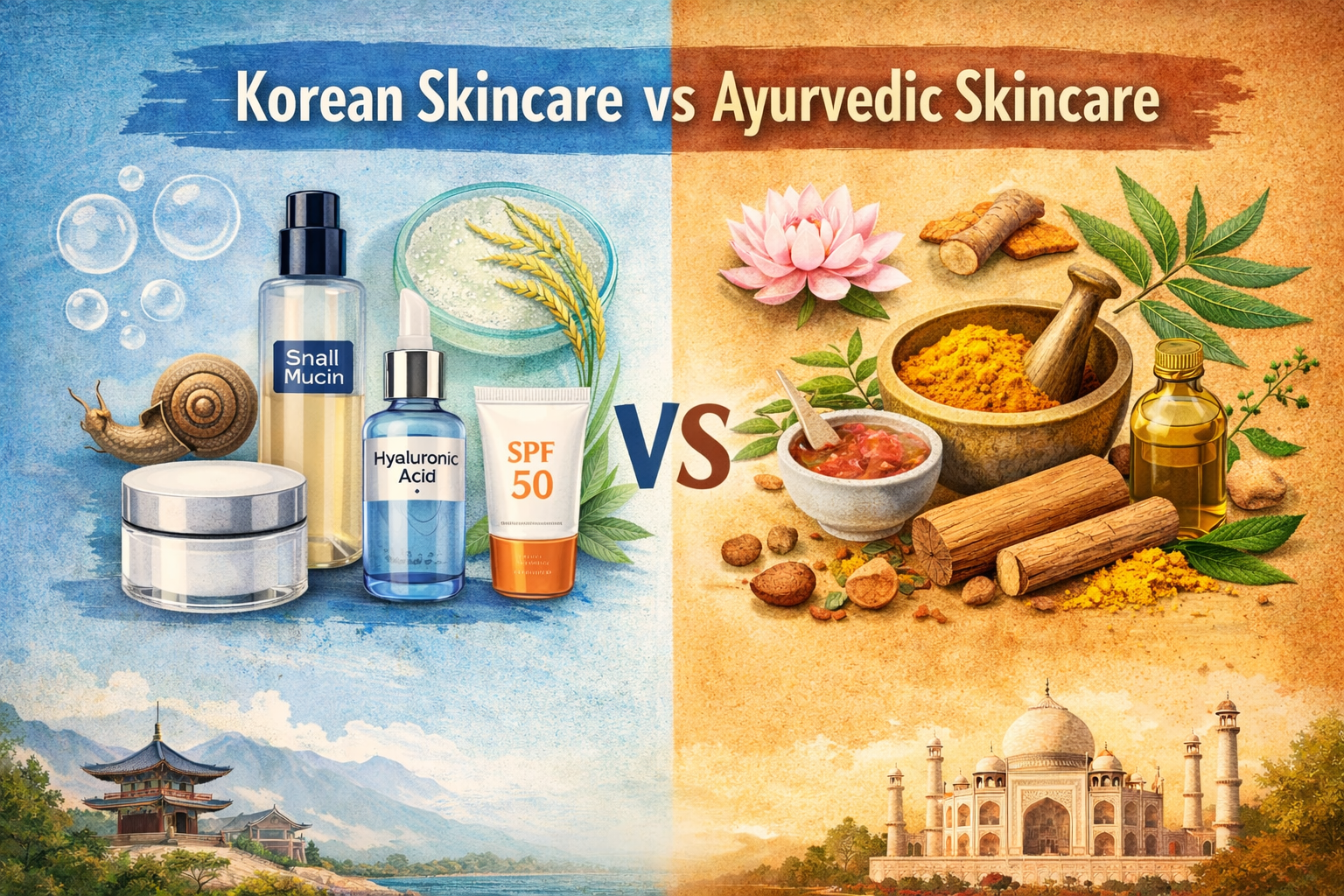
Ayurvedic formulations rely heavily on natural herbs, oils, and minerals, such as:
- Neem for acne and purification
- Turmeric for anti-inflammatory and brightening benefits
- Sandalwood for calming irritated skin
- Rose water for hydration and toning
- Aloe vera for soothing and healing
Rather than offering instant results, Ayurvedic skincare focuses on long-term skin health. It targets the root cause of issues like acne, pigmentation, excessive oiliness, and sensitivity. Diet, sleep, stress management, and daily routines play a crucial role alongside topical treatments.
For Indian skin—often prone to tanning, uneven tone, acne, and pigmentation—Ayurveda has traditionally been a trusted solution, especially for those who prefer clean, chemical-free skincare.
What Is Korean Skincare?
Korean skincare, popularly known as K-beauty, is all about science-backed formulations, skin barrier repair, and intense hydration. Unlike Ayurveda’s minimalistic approach, Korean skincare is famous for its multi-step routines, which may include cleansing, toning, essence, serum, moisturizer, and sunscreen.
Some commonly used Korean skincare ingredients include:
- Hyaluronic acid for deep hydration
- Snail mucin for repair and elasticity
- Rice water for brightening
- Fermented extracts for skin renewal
- Gentle exfoliating acids for texture improvement
The philosophy behind Korean skincare is prevention over correction. It focuses on maintaining a healthy skin barrier so that concerns like dullness, fine lines, pigmentation, and dehydration don’t appear in the first place.
For Indian skin exposed to harsh sunlight, pollution, and humidity, Korean skincare’s emphasis on hydration and sun protection can be extremely beneficial.
How Does Indian Skin Differ?
Indian skin is unique due to climatic conditions, genetics, and lifestyle factors. Most Indian skin types deal with:
- Excess sun exposure leading to tanning and pigmentation
- High humidity causing oiliness and acne
- Pollution-induced dullness and sensitivity
- Dehydration despite oily skin
This means Indian skin needs a careful balance of hydration, protection, and healing. Heavy products can clog pores, while overly stripping products can damage the skin barrier. That’s why blindly following one skincare philosophy may not always work.
Korean vs Ayurvedic Skincare: A Realistic Comparison
Instead of choosing one over the other, it’s more practical to understand what each does best.
Ayurvedic skincare excels at:
- Treating acne and breakouts naturally
- Reducing pigmentation and tanning over time
- Calming sensitive or inflamed skin
- Supporting long-term skin health
Korean skincare excels at:
- Deep hydration and moisture layering
- Strengthening the skin barrier
- Improving skin texture and glow
- Providing effective sun protection
Ayurveda heals, while Korean skincare protects and enhances. When combined wisely, they complement each other beautifully.
So, What’s Better for Desi Skin?
The honest answer: a hybrid approach works best.
Indian skin can greatly benefit from Korean skincare products for daily hydration, lightweight moisturization, barrier repair, and sunscreen. At the same time, Ayurvedic skincare can be incorporated to tackle persistent concerns like acne, pigmentation, and inflammation using natural, time-tested remedies.
For example:
- Use a Korean hydrating toner and sunscreen daily
- Include an Ayurvedic face pack or oil once or twice a week
- Combine gentle Korean exfoliation with Ayurvedic soothing ingredients
This balanced routine allows you to enjoy modern skincare innovation without disconnecting from traditional wisdom.
Final Thoughts
Korean skincare and Ayurvedic skincare are not competitors—they are allies. One brings cutting-edge science and innovation, while the other offers deep-rooted healing and balance. For Indian skin that faces diverse challenges, blending the best of both worlds is the smartest move.
Because when tradition meets technology, your skin gets exactly what it needs—healthy, glowing, and resilient beauty.
Also Read